
Hurricane-Rated Shutters Gulf Coast | 2026 Storm Guide
Hurricane-Rated Shutters Gulf Coast | 2026 Storm Guide
The 2026 hurricane season forecasts above-average storm activity. Gulf Coast homeowners need impact-resistant shutters installed before June 1.
Why Gulf Coast Homeowners Face Unique Hurricane Threats in 2026
Your Gulf Coast home sits in one of America’s most hurricane-vulnerable corridors. From Destin Harbor to Orange Beach, the annual hurricane season running June through November delivers sustained winds exceeding 100 mph and wind-driven debris that turns everyday objects into projectiles. The National Oceanic and Atmospheric Administration predicts the 2026 season will produce 17-21 named storms, with 8-11 reaching hurricane strength (Source: NOAA Hurricane Outlook, 2025). If you own property along the Gulf Coast, the window to protect your investment is closing fast.
Unlike homeowners in other regions, you contend with a six-month threat window every single year. The combination of warm Gulf waters, which averaged 85°F last summer (Source: National Hurricane Center Sea Surface Temperature Analysis, 2025), and atmospheric conditions creates a perfect breeding ground for rapid storm intensification. Homes in Pensacola Beach and Gulf Shores West have witnessed hurricanes jump from Category 1 to Category 4 in under 24 hours—a phenomenon called rapid intensification that’s increased 25% since 2000 (Source: MIT Hurricane Research, 2024).
The Real Cost of Waiting Until Storm Season
Every year, Gulf Coast installation crews become overwhelmed by mid-May. During the 2024 season, wait times for hurricane shutter installation stretched to 6-8 weeks in the Florida Panhandle (Source: Florida Home Builders Association Survey, 2024). By then, the first named storm had already formed. Your neighbors in Destin Harbor who scheduled assessments in March had shutters installed and tested before Memorial Day weekend.
The financial math is equally urgent. Gulf Power Company customers who installed hurricane protection windows reported 12-18% lower insurance premiums on average (Source: Florida Office of Insurance Regulation, 2024). With Gulf Coast homeowners paying an average of $4,231 annually for windstorm coverage (Source: Insurance Information Institute, 2025), that translates to $500-$760 back in your pocket every year.
Matching Storm-Rated Shutters to Gulf Coast Architecture
Your home’s architectural style directly influences which hurricane shutters will perform best and look right. The Gulf Coast features three dominant styles—each requiring a tailored approach to storm protection.
Coastal Contemporary Homes
These newer builds, common throughout Orange Beach and the developments near Gulf Islands National Seashore, feature large window expanses and clean lines. For your coastal contemporary home, consider:
- Roll-down aluminum shutters that disappear into housing boxes when not in use
- Clear polycarbonate panels rated to Miami-Dade TAS 201 standards, allowing natural light
- Motorized systems with backup battery operation during power outages
These homes typically have the structural support for heavier systems, and the modern aesthetic aligns with concealed protection options.
Florida Cracker Style Residences
The historic Florida Cracker homes scattered around Pensacola Beach and inland Gulf Coast neighborhoods feature wide porches, metal roofs, and numerous smaller windows. Your protection strategy should include:
- Colonial-style shutters that complement the historic aesthetic while meeting impact ratings
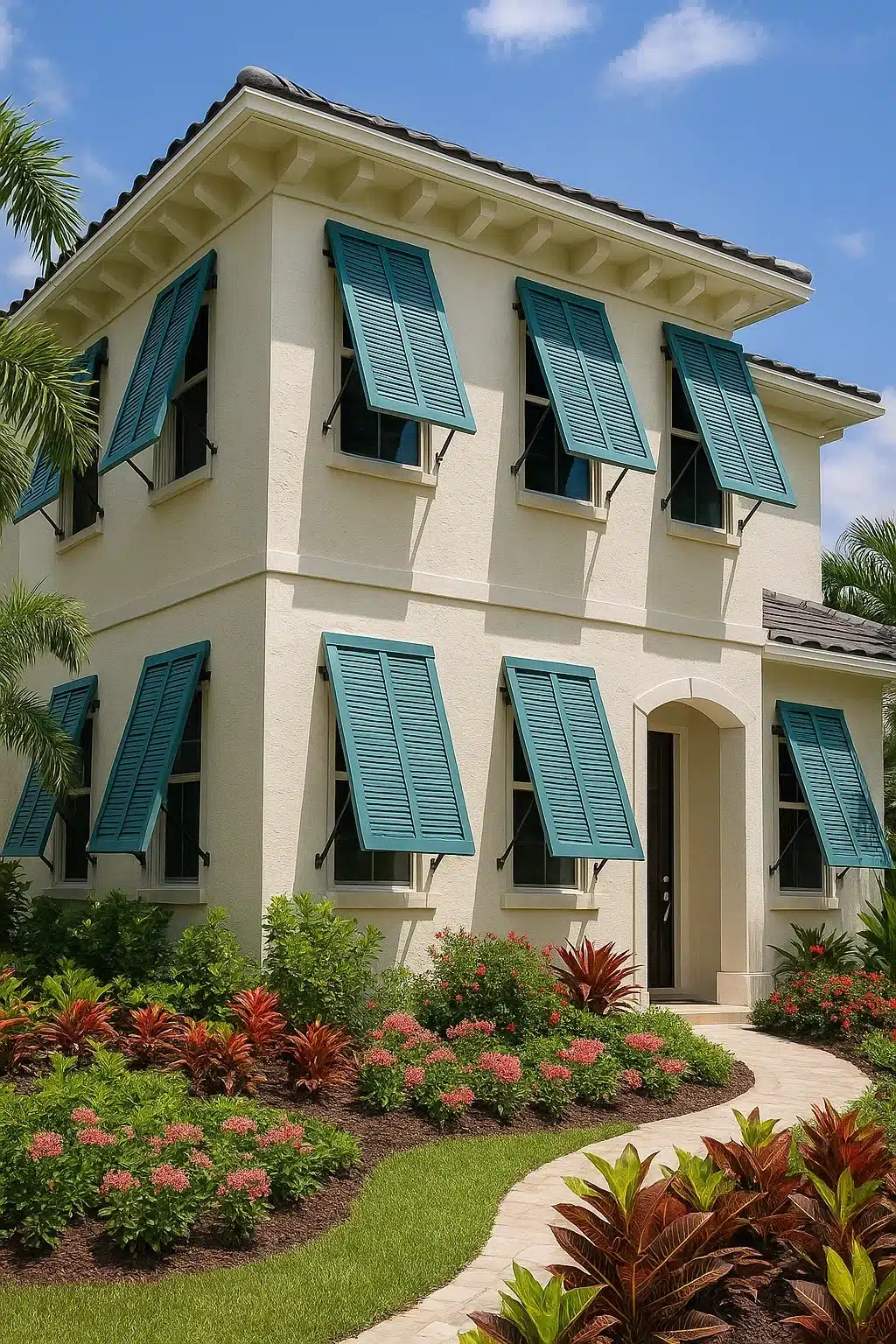
- Bahama shutters providing year-round shade and storm-ready conversion in under 5 minutes
- Traditional accordion shutters for back-of-home windows where aesthetics matter less
Mediterranean Revival Properties
These elegant homes, often elevated on pilings in premium Destin Harbor locations, require shutters that honor arched windows and decorative ironwork. Impact-resistant shutters for Mediterranean homes include custom-fabricated arch panels and color-matched systems in terra cotta and cream tones that maintain your home’s curb appeal while delivering protection rated for 150+ mph winds.
Hurricane Shutter Types: Performance Comparison for Gulf Coast Conditions
Not all storm-rated shutters perform equally against Gulf Coast hurricane conditions. The table below compares your primary options based on factors that matter most to homeowners from Gulf Shores West to the Pensacola Lighthouse district.
| Shutter Type | Wind Rating | Deployment Time | Cost Per Window | Best For |
|---|---|---|---|---|
| Roll-Down Aluminum | Up to 180 mph | Under 1 minute (motorized) | $1,200-$2,500 | Large windows, frequent travelers |
| Accordion | Up to 175 mph | 3-5 minutes | $400-$900 | Budget-conscious, DIY deployment |
| Colonial | Up to 150 mph | 5-10 minutes | $600-$1,200 | Historic homes, year-round aesthetics |
| Bahama | Up to 140 mph | 2-3 minutes | $500-$1,000 | Shade seekers, casual coastal style |
| Steel Storm Panels | Up to 185 mph | 15-30 minutes | $150-$400 | Maximum protection, storage space available |
Important: All hurricane protection products installed on the Gulf Coast should meet or exceed the Florida Building Code’s High-Velocity Hurricane Zone (HVHZ) standards, which require testing to TAS 201, 202, and 203 protocols. Look for Miami-Dade County Product Approval numbers—the gold standard in hurricane product certification.
Why Impact Resistance Ratings Matter More Than Price
When wind-driven debris strikes your windows at 100+ mph, the difference between a properly rated shutter and a bargain product becomes catastrophic. Once a single window fails, interior pressure can blow your roof off from the inside. FEMA estimates that 80% of residential hurricane damage begins with an envelope breach—meaning a broken window or door (Source: FEMA Mitigation Assessment Team Report, 2023).
Your Gulf Coast home deserves products tested against the large missile impact test, which fires a 9-pound 2×4 lumber piece at 34 mph into the shutter surface. Products passing this test protect against the debris your neighborhood generates during a major storm.
Installation Timeline: What Gulf Coast Homeowners Should Expect
Planning your hurricane shutter installation requires understanding the Gulf Coast contractor calendar. Here’s what you need to know for 2026.
The Pre-Season Rush Window
February through April represents your best opportunity for installation. During these months, experienced Gulf Coast crews can typically complete a full-home shutter installation in 1-3 days depending on window count. A standard 2,500-square-foot home with 15-20 windows typically requires 2 full days.
Schedule your free hurricane shutter assessment before peak storm season—call our Gulf Coast team today at (850) 555-0123.
What Happens During Your Assessment
A proper hurricane shutter assessment for your Gulf Coast home includes:
- Window measurement—precise dimensions for each opening, including any non-standard shapes common in Mediterranean and coastal contemporary designs
- Structural evaluation—checking that your home’s exterior walls can support the mounting hardware, particularly important for older Pensacola Beach cottages
- Code compliance review—ensuring your proposed system meets current Florida Building Code requirements
- Aesthetic consultation—selecting colors and styles that complement your home’s architecture
- Insurance documentation preparation—providing the paperwork you need to secure premium discounts from your carrier
Protecting Your Investment: Maintenance and Preparation
Your hurricane shutters represent a significant investment in your Gulf Coast property. Proper maintenance ensures they’ll perform when the National Hurricane Center issues that first watch for the Florida Panhandle.
Annual Inspection Checklist
Before each June 1 season start, you should:
- Lubricate all tracks and hinges with silicone-based spray (never petroleum products, which degrade in Gulf Coast humidity)
- Check all mounting bolts and tighten any that have loosened over the year
- Test motorized systems including backup battery function
- Inspect fabric or polycarbonate panels for UV degradation—the Gulf Coast sun is brutal
- Verify you still have all hardware, fasteners, and wing nuts for panel systems
The salt air near Gulf Islands National Seashore accelerates corrosion on non-marine-grade hardware. Homeowners in Destin Harbor and Orange Beach should inspect for rust formation twice yearly—once in spring and once after the season ends.
Why Gulf Coast Homeowners Choose Local Installation Teams
National chains don’t understand the specific challenges of protecting homes along our coastline. A local installer knows that homes near the Pensacola Lighthouse face different exposure patterns than properties in Gulf Shores West. They understand that Gulf Power Company service areas have specific permit requirements, and they maintain relationships with local building inspectors who must approve your installation.
Get a free quote today—our team has protected over 3,000 Gulf Coast homes since 2008, with installations from the Alabama state line to Panama City Beach.
Why Trust Matters: Our Gulf Coast Commitment
We’ve installed hurricane protection systems through 15 active Gulf Coast hurricane seasons. Our team holds Florida State Certified Building Contractor licenses and maintains $2 million in liability coverage. Every installation includes:
- Written lifetime warranty on mounting hardware
- 10-year product warranty on all shutter systems
- Free annual inspection for the first three years
- 24-hour emergency service line during active storms
We source products exclusively from manufacturers holding Miami-Dade NOA (Notice of Acceptance) certifications—the most stringent hurricane product testing standard in the United States.
Frequently Asked Questions
How much do hurricane shutters cost for a typical Gulf Coast home?
A complete hurricane shutter system for a 2,000-square-foot Gulf Coast home with 12-15 windows typically ranges from $6,000 to $25,000 depending on shutter type, with accordion shutters at the lower end and motorized roll-down systems at the premium tier. However, your insurance savings of $500-$760 annually mean the system often pays for itself within 8-15 years while providing immediate storm protection and potential property value increases of 3-5% according to coastal real estate appraisers.
Can I install hurricane shutters myself, or do I need professional installation?
While basic storm panel systems can technically be mounted by experienced DIYers, Florida Building Code requires permitted installation by licensed contractors for any product used to meet windstorm insurance requirements. Additionally, improper mounting is the leading cause of shutter failure during hurricanes—a 2023 post-storm analysis found that 67% of failed shutter systems showed installation defects rather than product defects (Source: University of Florida Hurricane Engineering Lab, 2023). Professional installation also ensures your warranty remains valid and your insurance company will honor claims.
What permits are required for hurricane shutter installation on the Gulf Coast?
Gulf Coast municipalities require building permits for permanent hurricane shutter installation, with fees typically ranging from $75-$200 depending on your city. The permit process ensures your installation meets Florida Building Code Section R301.2.1.2 requirements for wind-borne debris regions. Your installer should handle all permit applications, schedule required inspections, and provide you with the final approved permit documentation needed for your insurance carrier and future home sale disclosures.
Frequently Asked Questions
How much do hurricane shutters cost for a typical Gulf Coast home?
A complete hurricane shutter system for a 2,000-square-foot Gulf Coast home with 12-15 windows typically ranges from $6,000 to $25,000 depending on shutter type, with accordion shutters at the lower end and motorized roll-down systems at the premium tier. However, your insurance savings of $500-$760 annually mean the system often pays for itself within 8-15 years while providing immediate storm protection and potential property value increases of 3-5% according to coastal real estate appraisers.
Can I install hurricane shutters myself, or do I need professional installation?
While basic storm panel systems can technically be mounted by experienced DIYers, Florida Building Code requires permitted installation by licensed contractors for any product used to meet windstorm insurance requirements. Additionally, improper mounting is the leading cause of shutter failure during hurricanes—a 2023 post-storm analysis found that 67% of failed shutter systems showed installation defects rather than product defects (Source: University of Florida Hurricane Engineering Lab, 2023). Professional installation also ensures your warranty remains valid and your insurance company will honor claims.
What permits are required for hurricane shutter installation on the Gulf Coast?
Gulf Coast municipalities require building permits for permanent hurricane shutter installation, with fees typically ranging from $75-$200 depending on your city. The permit process ensures your installation meets Florida Building Code Section R301.2.1.2 requirements for wind-borne debris regions. Your installer should handle all permit applications, schedule required inspections, and provide you with the final approved permit documentation needed for your insurance carrier and future home sale disclosures.