

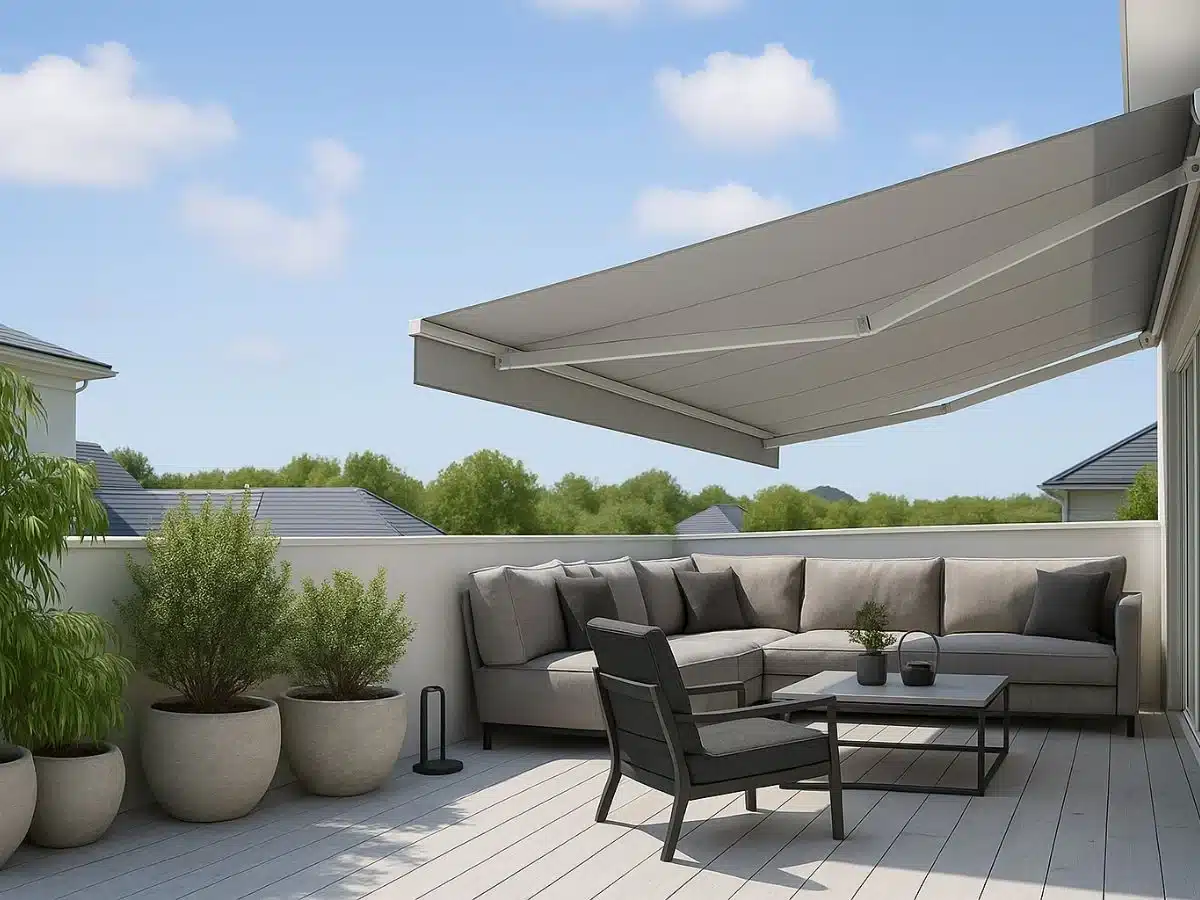
Retractable Awnings Gulf Coast | UV & Storm-Ready Patio Shade
Retractable Awnings Gulf Coast | UV & Storm-Ready Patio Shade
Your Gulf Coast patio faces brutal UV and sudden storms. Retractable awnings built for coastal conditions protect your outdoor living space year-round.
Between May and October, Gulf Coast patios absorb some of the most punishing UV radiation in the continental United States—the region logs an average UV index of 10-11 during peak summer months (Source: National Weather Service UV Index Forecast, 2024). Add sudden afternoon thunderstorms that roll in from the Gulf of Mexico with little warning, plus humidity levels hovering between 75-90% that degrade standard fabrics within two seasons, and you understand why homeowners from Ocean Springs to Orange Beach struggle to create comfortable outdoor entertaining spaces.
If you own a coastal ranch home in Pass Christian, an elevated beach house on Dauphin Island, or a waterfront condo overlooking the Biloxi Lighthouse, your patio shade solution must handle conditions that would destroy products designed for milder climates. This is exactly why retractable awnings engineered specifically for Gulf Coast weather have become the preferred choice for homeowners who refuse to sacrifice their outdoor living investment to salt air, intense sun, and tropical moisture.
Why Standard Patio Awnings Fail on the Gulf Coast
Most retractable awning manufacturers design for moderate climates—think Pennsylvania suburbs or California wine country. Those products simply cannot survive your environment. Here is what happens when homeowners install generic patio awnings in Biloxi, Mobile AL, or Gulfport:
- Fabric mildew within 18 months—Standard acrylic fabrics lack the antimicrobial treatments needed for 85%+ humidity exposure
- Frame corrosion at mounting points—Salt air traveling from Gulf Islands National Seashore reaches 15+ miles inland, attacking unprotected aluminum and steel
- Motor failure during summer storms—Non-coastal motors lack sealed housings, allowing moisture infiltration that shorts electrical components
- Wind damage from sudden squalls—Gulf Coast thunderstorms generate 40-60 mph gusts with minimal warning; untreated awnings become expensive kites
According to the National Oceanic and Atmospheric Administration, the Gulf Coast experiences an average of 60 thunderstorm days annually (Source: NOAA Storm Events Database, 2023). Your retractable shade solution must either retract automatically when sensors detect dangerous conditions or withstand those forces while extended.
The Humidity Factor Your Installer Must Understand
You cannot simply purchase a marine-grade awning and expect success. Installation technique matters enormously in high-humidity environments. When contractors mount retractable awnings on elevated beach houses without proper spacers, moisture becomes trapped between the mounting bracket and your home’s siding. Within three hurricane seasons, you will see rust staining, wood rot, or stucco degradation at every attachment point.
Experienced Gulf Coast installers use stainless steel hardware rated for marine environments—specifically 316-grade stainless, not the 304-grade used in landlocked regions. The price difference is approximately 40% higher per bracket, but replacement costs after salt corrosion failure run 8-10 times that premium (Source: International Stainless Steel Forum Corrosion Cost Analysis, 2022).
Hurricane-Ready Features That Actually Protect Your Investment
When a tropical system enters the Gulf of Mexico, you have 48-72 hours to prepare your property. Your retractable awning should simplify that process, not complicate it. Here is what separates hurricane-ready retractable awnings from standard products:
| Feature | Standard Awning | Hurricane-Ready Awning |
|---|---|---|
| Wind Rating (Extended) | 25 mph | 45-55 mph |
| Auto-Retract Sensor | Optional add-on | Integrated standard |
| Retraction Time | 45-60 seconds | Under 20 seconds |
| Frame Material | Powder-coated aluminum | Marine-anodized aluminum |
| Fabric Treatment | Water-resistant | Solution-dyed + antimicrobial |
The USS Alabama, sitting in Mobile Bay, demonstrates what proper marine protection looks like—everything exposed to salt air receives continuous maintenance with materials engineered for that environment. Your patio awning deserves the same respect for coastal conditions.
Automated Wind Sensors: Your 24/7 Protection
You cannot always be home when Gulf Coast weather turns violent. Automated wind sensors continuously monitor conditions and trigger retraction before dangerous gusts damage your investment. Quality sensors activate at your chosen threshold—typically 35 mph for extended awnings—and complete retraction before winds exceed structural limits.
Mississippi Power and Alabama Power customers face another consideration: power outages during storms. The best hurricane-ready retractable awnings include battery backup systems that maintain sensor operation and motor function even when grid power fails. Without this feature, your awning remains extended during the exact conditions most likely to destroy it.
UV Protection Engineered for Gulf Coast Intensity
Your patio furniture, outdoor rugs, and even your skin face UV exposure that exceeds most continental locations. The Gulf Coast receives approximately 2,900 hours of direct sunshine annually (Source: National Renewable Energy Laboratory Solar Radiation Data Manual, 2023). Standard patio umbrellas block perhaps 85% of UV radiation; properly engineered retractable awnings block 97-99% when using solution-dyed acrylic fabrics with UV stabilizers.
Fabric Selection for Maximum Lifespan
Your fabric choice determines whether your awning looks pristine in year five or becomes an eyesore by year three. For Gulf Coast installations, insist on these specifications:
- Solution-dyed acrylic—Color penetrates entire fiber, not just surface coating that fades and flakes
- Minimum 10-year fade warranty—Reputable manufacturers stand behind their UV resistance claims
- Antimicrobial treatment—Prevents mildew growth in your 85%+ humidity environment
- Breathable weave—Allows moisture vapor escape, preventing condensation buildup
Homeowners in Ocean Springs and Pass Christian often select lighter fabric colors to reflect more solar radiation—a critical consideration when your awning covers a south-facing patio receiving 8+ hours of direct Gulf Coast sun daily.
“We installed our retractable awning three summers ago before our daughter’s wedding reception. Our Pass Christian backyard went from unusable after 10 AM to comfortable all day. The fabric still looks brand new despite two hurricane seasons.”—Margaret T., Pass Christian homeowner
Installation Considerations for Coastal Architecture
Gulf Coast architectural styles present unique mounting challenges that require installer expertise. Your home’s construction method directly impacts how your retractable awning should be attached for maximum safety and longevity.
Elevated Beach Houses on Dauphin Island and Orange Beach
If your beach house sits on pilings, your installer cannot simply lag-bolt into whatever structure exists. Load calculations must account for both awning weight and wind uplift forces transmitted through the mounting brackets. Many elevated homes use engineered wood products that require specific fastener types and spacing patterns to prevent pull-through failures.
Coastal Ranch Homes with Stucco or Cement Fiber
The coastal ranch homes popular throughout Gulfport and Biloxi typically feature stucco or cement fiber siding over wood or metal framing. Proper installation requires identifying framing members and using appropriate anchoring systems—never mounting solely into siding material. Moisture management behind the mounting area becomes critical to prevent the trapped humidity that accelerates structural degradation.
Waterfront Condos with HOA Restrictions
Condo owners face additional complexity. Many Gulf Coast waterfront communities maintain strict architectural guidelines governing awning colors, projection distances, and mounting locations. Before selecting your retractable awning, request your HOA’s exterior modification requirements—a reputable installer will help you navigate approval processes they have completed many times previously.
Your outdoor entertaining space deserves protection engineered for the specific challenges found between the Biloxi Lighthouse and Gulf Islands National Seashore. Generic solutions fail; coastal-specific solutions thrive.
Making the Right Investment for Your Gulf Coast Patio
Retractable awnings represent a significant investment—quality coastal installations typically range from $3,500 to $8,500 depending on projection size, automation features, and fabric selection. That investment pays dividends through:
- Extended outdoor usability—Transform 4-hour morning patios into all-day entertaining spaces
- Furniture protection—Reduce UV degradation on cushions, tables, and outdoor rugs worth thousands
- Energy savings—Shaded windows reduce cooling loads; the Department of Energy reports awnings can reduce solar heat gain by up to 65% on south-facing windows (Source: U.S. Department of Energy Energy Saver Guide, 2024)
- Property value enhancement—Quality outdoor living improvements return 60-80% at resale in coastal markets (Source: National Association of Realtors Remodeling Impact Report, 2023)
Do not trust your Gulf Coast patio to contractors unfamiliar with coastal installation requirements. Your retractable awning must handle conditions that would destroy inland products within seasons. Schedule your free Gulf Coast patio shade consultation today and discover how hurricane-ready, UV-blocking retractable awnings transform outdoor living from Ocean Springs to Orange Beach.
Frequently Asked Questions
How quickly should a retractable awning retract during sudden Gulf Coast storms?
Hurricane-ready retractable awnings should complete full retraction in under 20 seconds when wind sensors detect dangerous conditions. This rapid response time matters because Gulf Coast thunderstorms often produce 40-60 mph gusts within minutes of the first wind speed increase. Standard awnings taking 45-60 seconds to retract risk damage during that critical window when conditions escalate faster than the motor can respond.
What maintenance schedule do retractable awnings require in high-humidity coastal environments?
Gulf Coast retractable awnings require quarterly fabric inspections for mildew spots, semi-annual lubrication of all moving components with marine-grade lubricant, and annual professional inspection of motor seals and electrical connections. After any named tropical system passes within 100 miles of your location, inspect mounting hardware for loosening and fabric for salt residue that should be rinsed with fresh water within 48 hours to prevent corrosion acceleration.
Can retractable awnings be installed on homes with metal roofing common in coastal construction?
Yes, but installation requires specific techniques different from traditional roofing materials. Metal roof installations typically use standoff brackets that clamp to standing seams without penetrating the roofing material, preserving warranty coverage. Your installer must match bracket materials to your roof metal type—mixing dissimilar metals causes galvanic corrosion that accelerates dramatically in salt air environments, potentially causing bracket failure within 3-5 years.
What is the typical warranty coverage for retractable awnings installed in coastal Florida and Alabama?
Quality manufacturers offer tiered warranty structures for coastal installations: 10-year coverage on solution-dyed fabrics against fading, 5-year coverage on frames and mechanical components, and 3-year coverage on motors and electronic sensors. However, warranties typically require proof of professional installation by certified dealers and may exclude damage from named storms unless specific wind ratings were not exceeded. Always verify that your installer’s work carries independent warranty coverage separate from manufacturer warranties.


